
Smith Lake Hybrid Bass Fishing Spots Survival Guide
Seasonal Strategies for Smith Lake Hybrid Bass
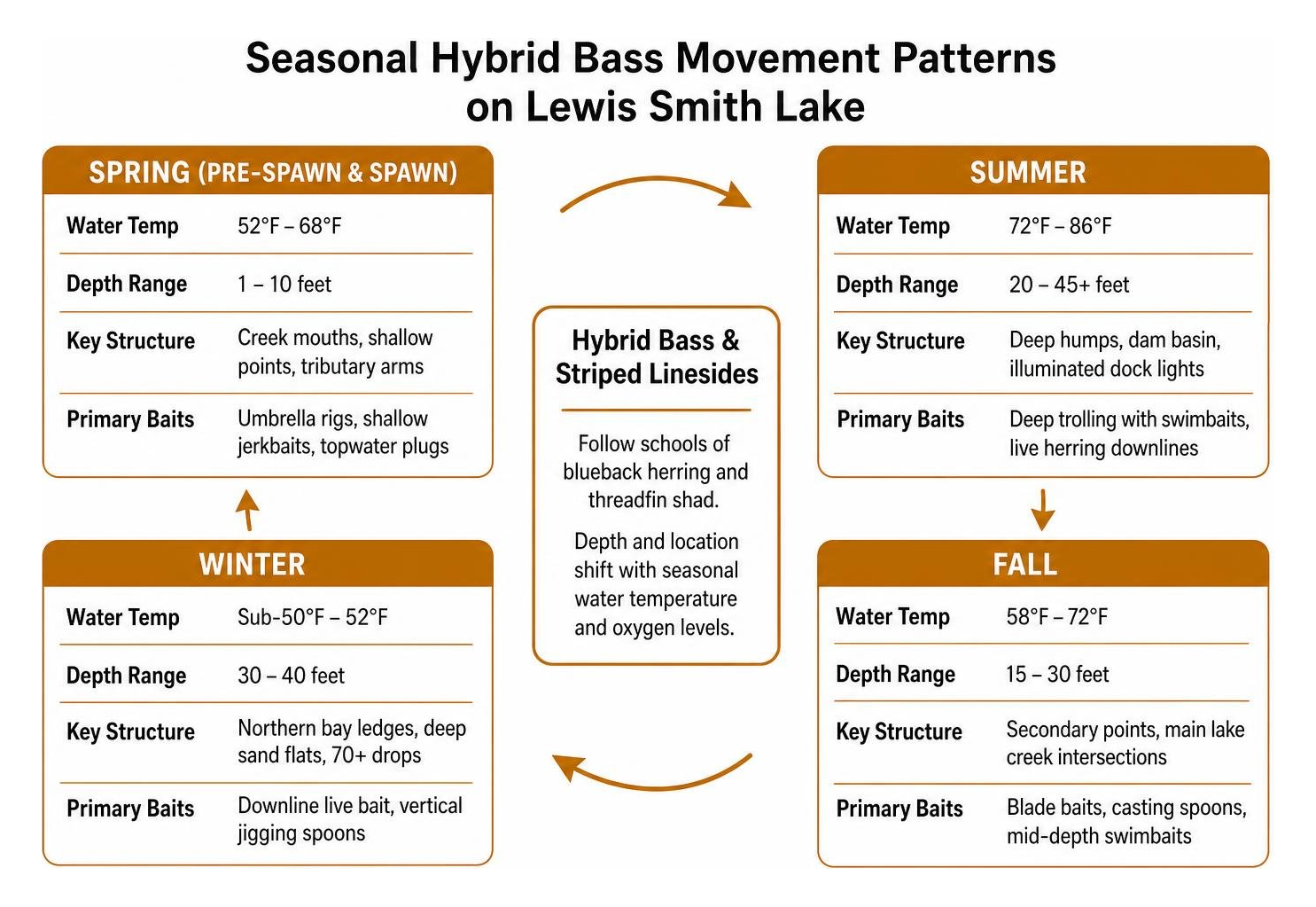
Tracking hybrid bass and striped linesides on Lewis Smith Lake requires understanding how seasonal water temperatures and oxygen levels drive pelagic fish movements. Because these open-water predators spend their lives shadowing roaming schools of blueback herring and threadfin shad, their depth and location shift dramatically between winter cold fronts and midsummer heat waves. Staying up to date with the latest Smith Lake fishing report gives you real-time insight into water clarity and surface conditions before you launch.
| Season | Water Temp Range (°F) | Target Depth Range | Key Structure & Habitat | Primary Baits & Presentations |
|---|---|---|---|---|
| Spring (Pre-Spawn & Spawn) | 52°F – 68°F | 1 – 10 feet | Creek mouths, shallow points, tributary arms | Umbrella rigs, shallow jerkbaits, topwater plugs |
| Summer | 72°F – 86°F | 20 – 45+ feet | Deep humps, dam basin, illuminated dock lights | Deep trolling with swimbaits, live herring downlines |
| Fall | 58°F – 72°F | 15 – 30 feet | Secondary points, main lake creek intersections | Blade baits, casting spoons, mid-depth swimbaits |
| Winter | Sub-50°F – 52°F | 30 – 40 feet | Northern bay ledges, deep sand flats, 70’+ drops | Downline live bait, vertical jigging spoons |
Spring Pre-Spawn and Shallow Feeding
As early spring sun warms the upper water column into the 52°F to 68°F range, fish stage aggressive feeding runs toward creek mouths and tributary channels. During March and April, predatory linesides push bait into shallow water between 1 and 10 feet deep along wind-blown red clay points and gravel banks.
When blueback herring begin their shoreline spawning runs, hybrid bass blitz the surface during low-light dawn and dusk windows. Anglers who cast large walking topwater plugs, wake baits, and compact umbrella rigs across shallow shoals can experience explosive strikes.
Summer Deep Water Patterns for Smith Lake Hybrid Bass
When summer surface temperatures reach 80°F or higher, open-water bass retreat to deep, well-oxygenated water. Many fish migrate toward the deep southern basin near the dam, suspending at depths of 20 to 45 feet or more.
During daylight hours, trolling deep-diving swimbaits or dropping live bait downlines along channel drops is the standard approach. After sunset, hybrid bass frequently move toward illuminated deep-water boat docks along channel swings to hunt baitfish drawn to the light.
Fall and Winter Locational Shifts
In late autumn, cooling water prompts baitfish and hybrids to move toward northern bays and wide feeder creek channels. Once winter water temperatures drop below 50°F, bait schools compress tightly, and hybrid bass settle onto underwater ledges in 30 to 40 feet of water adjacent to 70- to 100-foot drop-offs.
Target these winter schools by drifting live shad on sand flats during low-light periods or vertically jigging heavy metal spoons directly below your boat.
Top Fishing Locations and Underwater Structure
Covering over 21,000 acres in North Alabama, Lewis Smith Lake is an ultra-clear highland reservoir characterized by steep rock bluffs, deep submerged timber, and plunging river channels. To consistently catch fish here, you must rely on contour mapping and marine electronics to pinpoint high-percentage bottom contours. You can explore The Best Fishing Spots on Smith Lake for Every Angler to map out your boat runs across Cullman County and Winston County waters.
Main Lake Humps, Points, and Saddles
Submerged humps topping out at 16 to 20 feet of water—especially those flanked by steep drops plunging into 70 to 100 feet—are prime feeding zones. Underwater saddles between islands or submerged ridges concentrate baitfish whenever prevailing winds create surface currents. Position your boat over deep water and cast across the shallow crest of the structure, working your lure down the contour breaks.
Creek Arms and Channel Intersections
The major creek arms—including Ryan Creek, Rock Creek, Clear Creek, and the Sipsey Fork—offer distinct seasonal advantages:
- Sipsey Fork & Ryan Creek: Feature deep, clear channel swings and prominent main-lake points where pelagic schools intercept migrating forage.
- Clear Creek & Rock Creek: Offer slightly more stained water after spring rains, providing low-visibility cover that allows anglers to fool wary hybrid bass using faster reaction presentations.
- Channel Intersections: Where tributary creeks merge into flooded riverbeds, bottom transitions create ambush points for schooling predators.
Effective Baits, Tackle, and Presentation Techniques
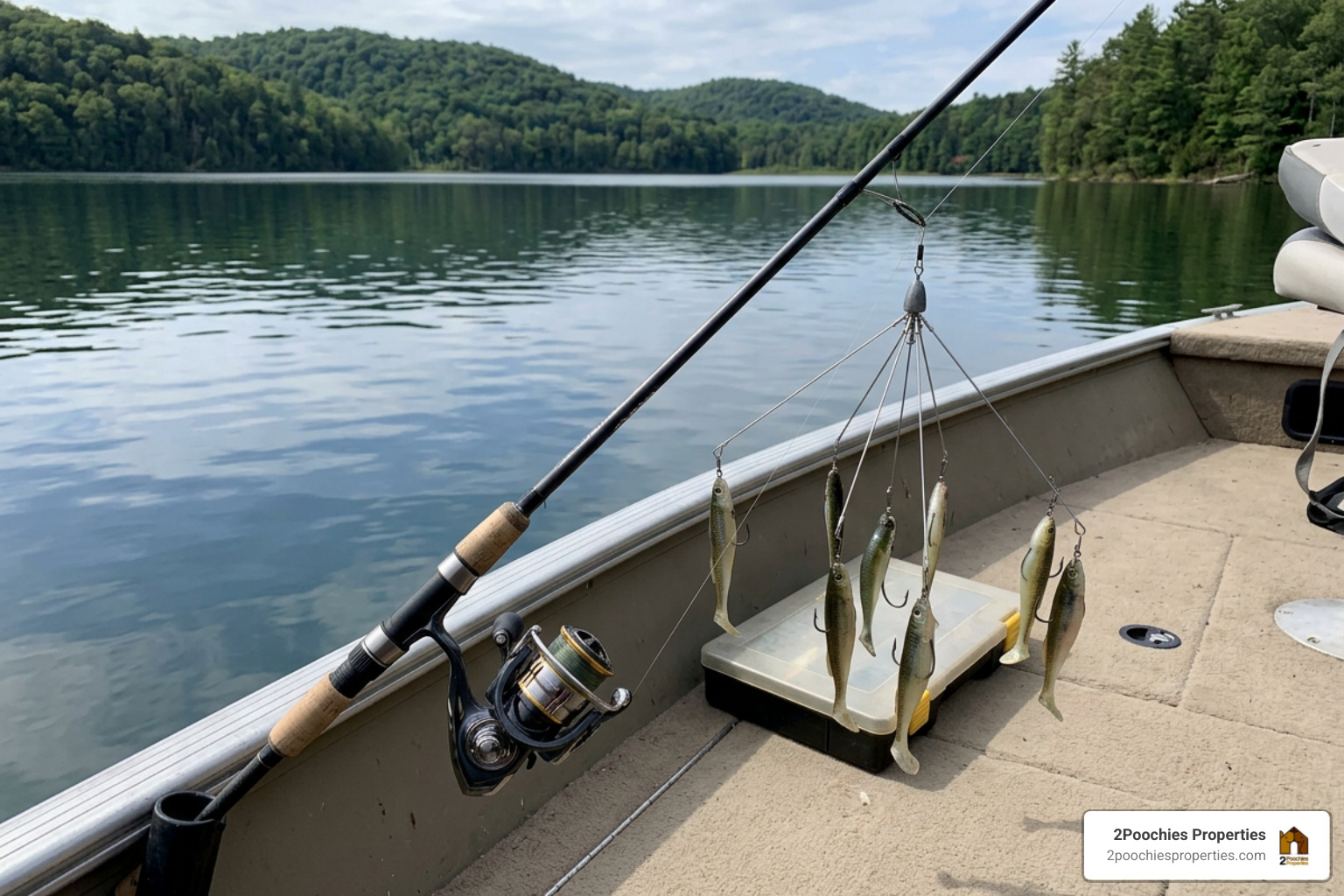
Mastering open-water tactics requires dialing in gear that handles explosive initial strikes and long runs. For an in-depth breakdown of tournament-proven setups, check out our guide on Fishing Lewis Smith Lake Like a Pro.
Essential Baits and Presentations for Smith Lake Hybrid Bass
Match your artificial presentations directly to blueback herring and gizzard shad profiles:
- Umbrella Rigs: Multi-arm wire rigs fitted with 3.5- to 5-inch pearl or translucent swimbaits imitate scattered bait pods. Retrieve them steadily along channel breaks and over deep humps.
- Soft Body Swimbaits: Rig 4- to 6-inch paddle-tail swimbaits on 1/2- to 3/4-ounce jigheads for long casts across wind-blown points.
- Hard Jerkbaits & Crankbaits: Deep-diving crankbaits that hit 14 to 18 feet trigger reaction strikes around hump saddles, while suspending jerkbaits worked with erratic pauses excel in cold, clear pre-spawn water.
- Blade Baits & Spoons: Heavy 3/4- to 1-ounce chrome slab spoons and jigging blades produce consistent winter strikes when dropped vertically into schools marked on 2D sonar.
- Color Selection: In Smith Lake’s clear waters, prioritize natural colors like pearl white, ghost shad, silver flash, and subtle chartreuse accents.
Live Bait Rigging and Electronic Sonar Tactics
Live bait presentations remain one of the most reliable ways to connect with trophy linesides. Rig live 4- to 6-inch gizzard shad or locally caught blueback herring on a 2/0 to 3/0 non-offset circle hook.
Connect a 20-lb monofilament mainline to a heavy-duty barrel swivel, slide on a 1.5- to 2-ounce egg sinker, and tie on a 5-foot leader of 14- to 20-lb fluorocarbon. The monofilament mainline provides forgiving stretch during sudden surges, while the fluorocarbon leader remains virtually invisible in clear water.
Use forward-facing sonar and down-scan imaging to verify fish depth before lowering your bait directly into or slightly above suspended arches.
Lewis Smith Lake Regulations and Fishery Conservation
To maintain a balanced fishery, the Alabama Department of Conservation and Natural Resources enforces specific harvesting rules across the lake. Anglers targeting open-water linesides should review the state profiles for Hybrid Striped Bass and consult our overview on Lewis Smith Lake fishing regulations.
- Creel and Size Limits for Linesides: State regulations stipulate that it is illegal to possess more than two combined White Bass, Yellow Bass, Saltwater Striped Bass, or hybrid striped bass exceeding 16 inches in total length within the daily creel limit.
- Black Bass Slot Limits: Anglers catching largemouth or spotted bass must immediately release all fish measuring between 13 and 15 inches. Biologists encourage harvesting legal spotted bass under 13 inches to reduce competition for forage.
- Summer Thermal Stress: During July, August, and September, striped and hybrid bass caught from deep water experience high catch-and-release mortality due to warm surface layers. Limit your catch during extreme summer heat to avoid unintentional fish loss.
Frequently Asked Questions About Hybrid Bass on Smith Lake
How do hybrid bass differ from striped bass and spotted bass in Smith Lake?
Hybrid striped bass (a cross between white bass and striped bass) feature broken horizontal body stripes and a deeper, stockier body profile compared to the sleek, unbroken lines of pure striped bass. Spotted bass are black bass characterized by rough tooth patches on the tongue and distinct lateral blotches, holding closer to shoreline structure than open-water hybrids.
What is the best time of day and weather condition to catch Smith Lake hybrids?
Low-light periods—such as sunrise, dusk, overcast rainy days, and night fishing around lighted docks—produce the most active feeding frenzies. Moderate wind also improves catch rates by blowing pelagic bait schools onto exposed points and shoals.
What electronics and sonar setups work best for locating deep suspended schools?
A combination of side-scan imaging for locating schools on wide flats, down-scan for pinpointing exact school depth along ledges, and forward-facing live sonar for monitoring real-time lure reactions gives anglers a clear advantage in deep, clear water.
Plan Your Next Smith Lake Fishing Trip
Whether you are traveling down from Nashville or making the quick drive up from Birmingham, a memorable trip to Lewis Smith Lake combines exciting open-water angling with comfortable lakefront living.
At 2Poochies Properties, our pet-friendly lakefront homes in Crane Hill and Cullman County feature secure fenced yards, durable flooring, and professional cleaning so the whole family can relax together. For days on the water, we also offer separate pontoon boat rentals for family cruising and swimming. Please note that while our vacation homes warmly welcome four-legged guests, our pontoon rentals are strictly not pet-friendly to maintain high marine safety standards for all guests.
Skip third-party booking fees and secure the best dates for your next family fishing trip by booking directly with 2 Poochies Properties through our official website. Contact us today to reserve your pet-friendly Smith Lake vacation rental!