
Most dogs can enjoy a day on the lake if you do three things: get them used to the boat before you leave the dock, put a properly fitted life jacket on them, and plan the day around shade, water and bathroom breaks. A lake stay with the dog welcome in the house makes all of this easier, because you can practice, rinse off and rest between outings. At 2Poochies Properties, our lakefront homes on Smith Lake, Alabama, are built for families who refuse to leave the dog behind.
Key Takeaways
- Introduce the boat while it is still and tied up, and reward calm steps. Never force a nervous dog onto the water.
- Every dog wears a fitted life jacket with a handle, even a strong swimmer. Pick the jacket for flotation, fit and visibility.
- Bring fresh water, shade, a leash, waste bags and a pet first-aid kit, and know where the nearest emergency veterinarian is.
- Agree on an overboard plan before you leave: cut the engine, bring the dog to you, lift by the jacket handle.
- Booking direct with us lets you save and talk with us personally about the dog before you arrive.
Table of Contents
- Is your dog a good fit for a boat?
- Getting your dog ready before the first trip
- The life jacket and the rest of the gear
- Managing the day on the water
- What to do if your dog goes overboard
- Smith Lake: an easy place to start
- Planning a lake trip around your dog
- Stay lakefront, boat with the dog
- FAQ
- Sources
Is your dog a good fit for a boat?
Not every dog takes to the water the same way, and that is fine. The American Animal Hospital Association says Labrador retrievers and spaniels tend to be strong swimmers, while bulldogs and pugs may struggle because of their body structure. Breed is only a starting point. Watch your own dog.
Signs that a dog is not comfortable include excessive panting, labored breathing, uncoordinated movement, vomiting or diarrhea. The same AAHA guidance says to get the dog out of the water and call a veterinarian about any concerning symptoms. On a boat, that means heading back to the dock and calling your vet, not waiting to see whether it passes.
A useful rule for families: a dog that is curious, food-motivated and relaxed around new surfaces will usually adapt quickly. A dog that freezes, trembles or tries to hide needs more gradual steps, and some outings can simply be a short, calm cruise instead of a full day.
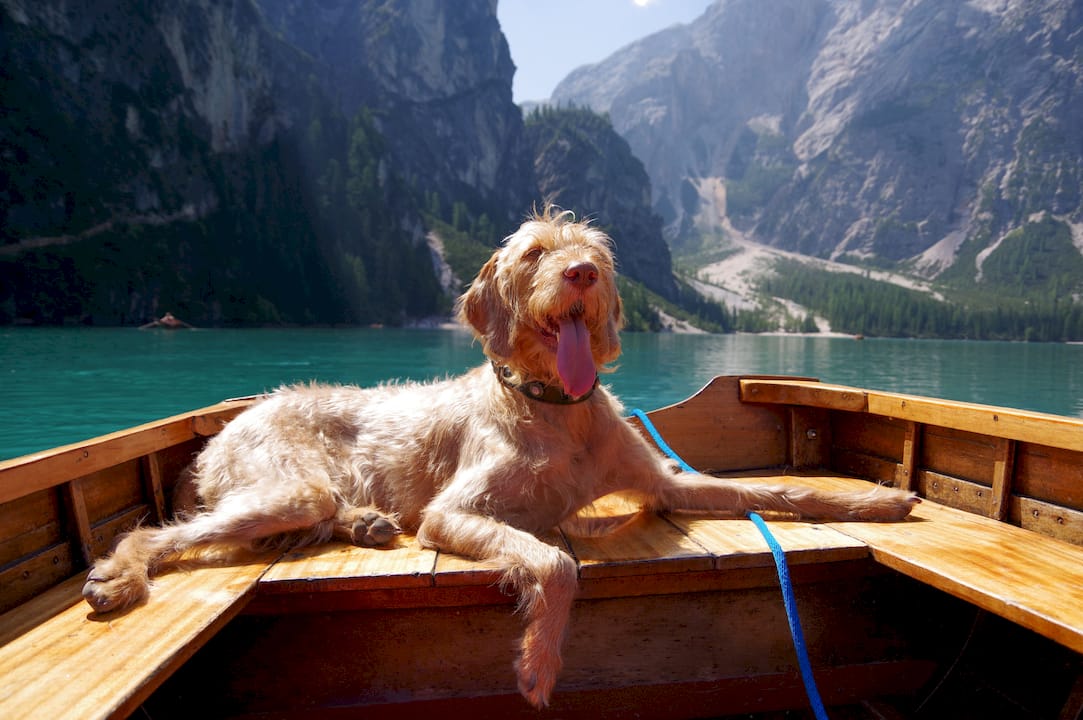
Getting your dog ready before the first trip
Preparation is where most boating trips with a dog are won or lost. The American Kennel Club recommends starting with the boat stationary, on land or in shallow water. Let the dog explore on its own, reward each calm step from approaching to climbing aboard, and practice getting on and off. If your dog shows stress, go back to an easier step.
Here is a simple sequence that works for most families:
- Let the dog sniff the boat at the dock. No pressure, no lifting, treats for calm behavior.
- Step aboard together while it is tied up. Keep sessions short and end while the dog is still happy.
- Practice getting on and off. The AKC also suggests a wobble board or another safe unstable surface at home, because moving surfaces can alarm dogs. For larger dogs, a boarding ramp or ladder should be practiced first on stable ground and then in calm water.
- Teach a spot. Virginia’s wildlife agency recommends a designated place aboard where the dog will not be underfoot, knock gear overboard or fall overboard. The Ohio Department of Natural Resources adds a loaded dry run, with the boat and equipment arranged as on a normal outing, and teaching the dog to stay put while underway.
- Take a short first outing. Calm water, light traffic, a cooler part of the day.
If you are staying with us, the dock and the shoreline are a natural place to do steps one to three on the first afternoon, with no rush and no crowd. We are happy to talk through your dog’s experience before you arrive so the plan fits your dog.
The life jacket and the rest of the gear
Why every dog wears one
The AKC says a dog should wear a life jacket on the water even if it is a strong swimmer, because an accident can leave a dog disoriented or exhausted. The jacket gives flotation and lets the dog rest its legs. The ASPCA makes the same point: confident swimmers can become disoriented or tired in an emergency, so breed and swimming ability are not a substitute for a jacket.
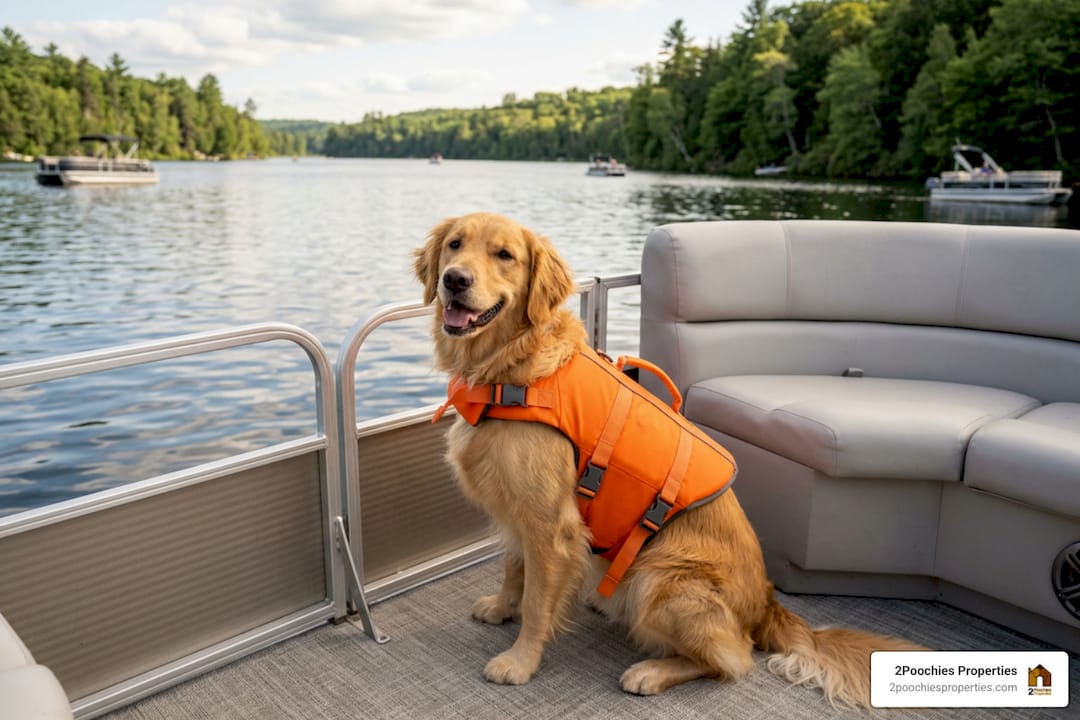
One detail that surprises many owners: federal rules on life jackets are written for people. The U.S. Coast Guard requires an appropriate, serviceable, readily accessible approved life jacket for each person aboard, with added requirements for vessels 16 feet or longer and for children under 13. Your dog’s jacket is on top of that, and it is your job to get it right.
How to choose and fit it
The AAHA recommends a bright or reflective jacket with a sturdy handle. Virginia’s wildlife agency warns that dog jackets vary in quality. Look for enough flotation for your dog’s size, durable construction and a fit that allows normal movement, because a restrictive jacket can increase risk.
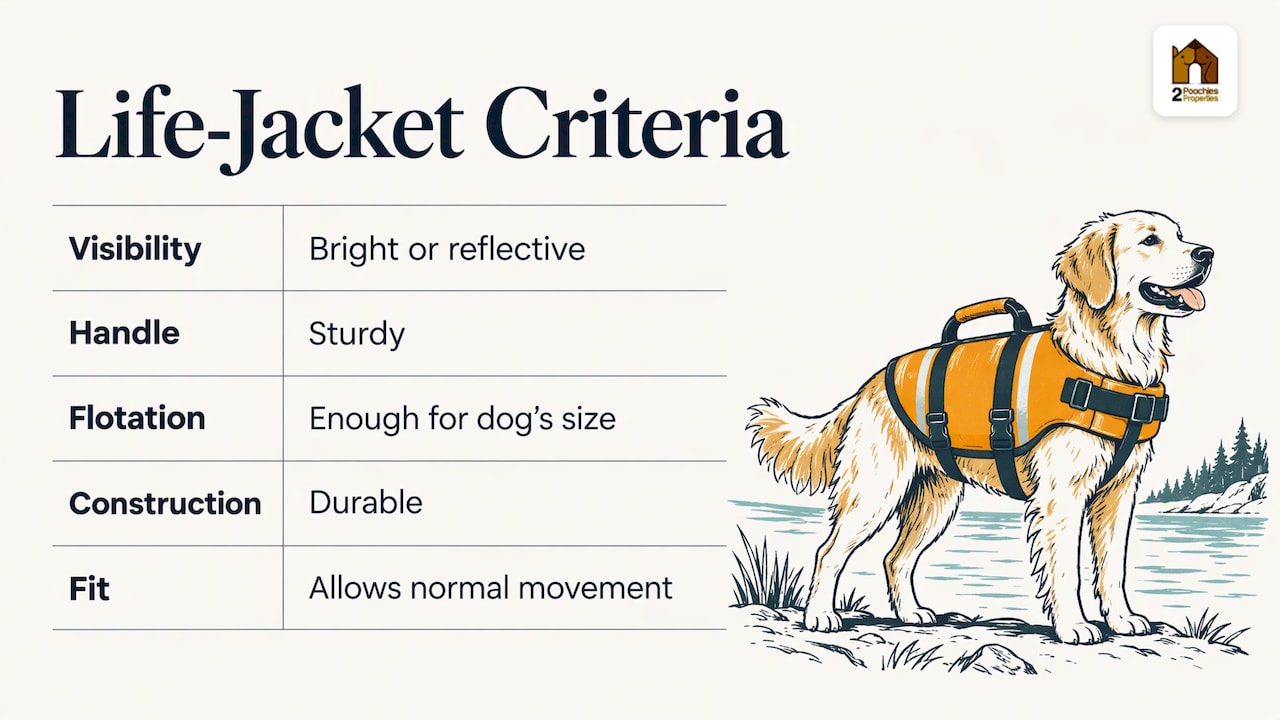
Fit it at home and let the dog wear it around the house and yard a few times, so the first time in it is not also the first time on the water.
Other things to pack
- Fresh water and a bowl, snacks, a leash and waste bags. The Ohio agency suggests planning restroom opportunities for the dog as carefully as for people.
- A pet first-aid kit with gauze, bandage material, antiseptic wipes, tweezers and any medications your dog needs, and the location of the nearest emergency veterinary hospital, as the AAHA advises.
- Identification on the collar.
- A shade source, such as a bimini top or a shaded seat.
One firm rule: never tether a dog to the boat while on the water. A capsize could trap and injure the dog.
Managing the day on the water
Heat, shade and water
Heat is the quiet risk on a summer lake day. Virginia’s wildlife agency recommends going out early or late in the day, especially for dogs on metal boats, and notes that surface water may not cool an overheated dog as you would expect. The ASPCA lists excessive panting, drooling and lethargy as heatstroke signs. If you see them, move the dog to shade or a cooler area and offer water.
Bring clean drinking water from home. The ASPCA advises discouraging dogs from drinking lake water, rinsing them after swimming, and avoiding water affected by algal blooms or other contamination. Virginia’s agency also notes that cyanobacteria toxins can make people and animals ill. If the water looks scummy or has a strong odor, pick another cove or another day.
Bathroom breaks
Plan them. For a short outing, a stop at the dock before you leave and a stop after you return is often enough. For longer days, Practical Sailor reports that turf mats are commonly used as onboard toilets because they resemble grass and can be rinsed. Pee pads may suit rough conditions. Practice using the mat at home first, since a dog will not use an unfamiliar surface on a moving boat.
Motion sickness
Dogs that get carsick are more likely to get seasick. A veterinarian quoted by Canadian Boating says excessive panting and drooling can be signs and that owners should ask about medication beforehand. Do not give your dog a human medication on your own. Veterinary Partner warns never to give a dog medication without veterinary guidance, noting that some options also cause sedation. Call your own veterinarian before the trip if your dog has a history of car sickness.
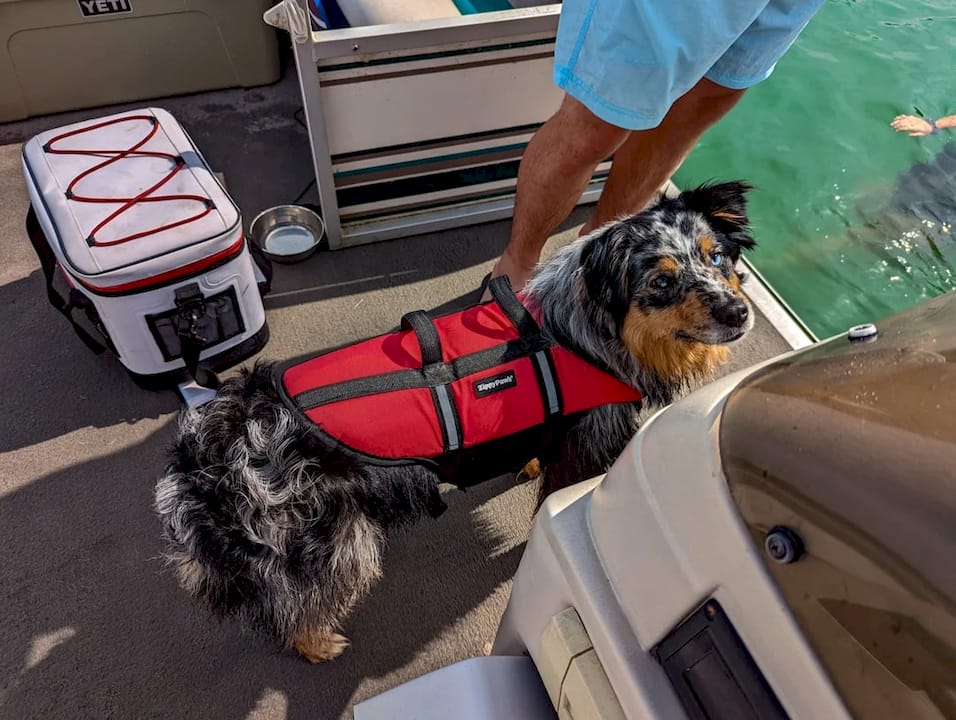
Fuel and chemicals
The ASPCA advises storing fuel, antifreeze, cleaners and other chemicals in sealed, pet-proof containers and taking special care while fueling and cleaning. Keep the dog away from hooks, bait and tackle as well.
What to do if your dog goes overboard
Decide this before you leave the dock, tell everyone aboard, and practice it. The routine in veterinary and boating safety guidance is consistent:
- Cut the engine. Never approach a swimming dog with the propeller turning.
- Go to a set spot and call the dog. Having a designated position keeps the response calm and fast.
- Lift by the life jacket handle. This is what the handle is for. A ramp or ladder helps larger dogs.
This routine is set out by Preventive Vet and by BOATERexam, and both stress rehearsing it. After a dunk, check the dog for coughing, lethargy or vomiting, and call your veterinarian about anything that worries you.
Smith Lake: an easy place to start
Lewis Smith Lake is a reservoir in northwest Alabama, and many families come for swimming, pontoon cruising and quiet coves. For a dog’s first boat days, the best setup is a place where you can walk the dog to the dock, practice getting aboard, take a short ride, then return to a yard and a cool house to rest.
The same idea works elsewhere in the state: a pet-friendly Gulf Shores house with boat slips shows how a dog can get used to a dock before the first ride. On Smith Lake, we think the quiet water and shoreline make an even gentler classroom.
Planning a lake trip around your dog
A good trip with a dog is mostly a matter of logistics:
- Pick early or late departures and keep midday for the yard, shade and a cool interior.
- Keep the first outing short. Thirty to forty minutes on calm water tells you plenty.
- Bring familiar things. The dog’s own bed, a favorite toy and the same treats you used in training.
- Rinse and dry the dog after swimming, and check paws and ears.
- Keep a rest day in the plan. Many dogs are happiest with one active day, then one slow one.
We have more on lake activities for dogs if you want ideas beyond the boat.
Our view: where the trip really starts
We think a dog’s boating day begins long before the engine starts. It begins with a calm arrival, a yard where the dog can settle, and an owner who is not worried about whether the stay will work out for the dog.
That is why our homes are set up for pets: fenced yards, dog beds and cleanup stations, with professional cleaning and allergy-friendly interiors so the home stays comfortable for everyone. Our guests talk to us directly, and that personal contact is what lets us answer the small questions that matter, like where the dock is in relation to the yard.
We also believe in booking direct. When you book directly with us, you save, and you get a real conversation about your dog, your group and your plans on the lake.
2Poochies Properties
Stay lakefront, boat with the dog
If you want to practice on a dock, swim, and then head out on a boat, our lakefront homes on Smith Lake are set up for families traveling with dogs, with swimming docks, kayaks and boat rentals available through us. Booking direct is how you save, and you deal with us personally from the first message.

See our pet-friendly Smith Lake homes and contact us to book direct. You can also browse our photo gallery to see the homes and docks.
FAQ
What dogs do well on boats?
Dogs that are curious, comfortable on new surfaces and happy to wear a life jacket usually do best. The AAHA notes that Labrador retrievers and spaniels tend to be strong swimmers, while bulldogs and pugs may struggle. Any dog can learn with gradual practice, but judge each one individually.
Does my dog really need a life jacket if it swims well?
Yes. The AKC and the ASPCA both say even strong swimmers can become disoriented or exhausted in an accident. A jacket with a handle also makes it much easier to lift the dog back aboard.
How do I keep my dog from getting seasick?
Start with short trips, keep the dog in a stable, shaded spot, and watch for drooling and heavy panting. If your dog gets carsick, ask your veterinarian about medication before the trip, and do not give any on your own.
Can I bring my dog on a boat from our lakefront home?
Yes, and it is a good way to introduce the boat gradually. Contact us before you arrive and tell us about your dog, and we will help you plan the stay.
Sources
- AKC: water safety tips for boating with dogs
- AAHA: water safety tips for dogs
- ASPCA: boating safety for pets
- Virginia Department of Wildlife Resources: boating with your family dog
- Ohio Department of Natural Resources: take your dog boating
- U.S. Coast Guard equipment requirements for recreational vessels
- Practical Sailor: tips for sailing with dogs
- Canadian Boating: pets on boats guide
- Veterinary Partner: diphenhydramine for dogs
- Preventive Vet: boating with your dog
- BOATERexam: boating with a dog
- Wikipedia: Lewis Smith Lake