
Don’t Get Skunked with the Latest Smith Lake Fishing Report
Introduction
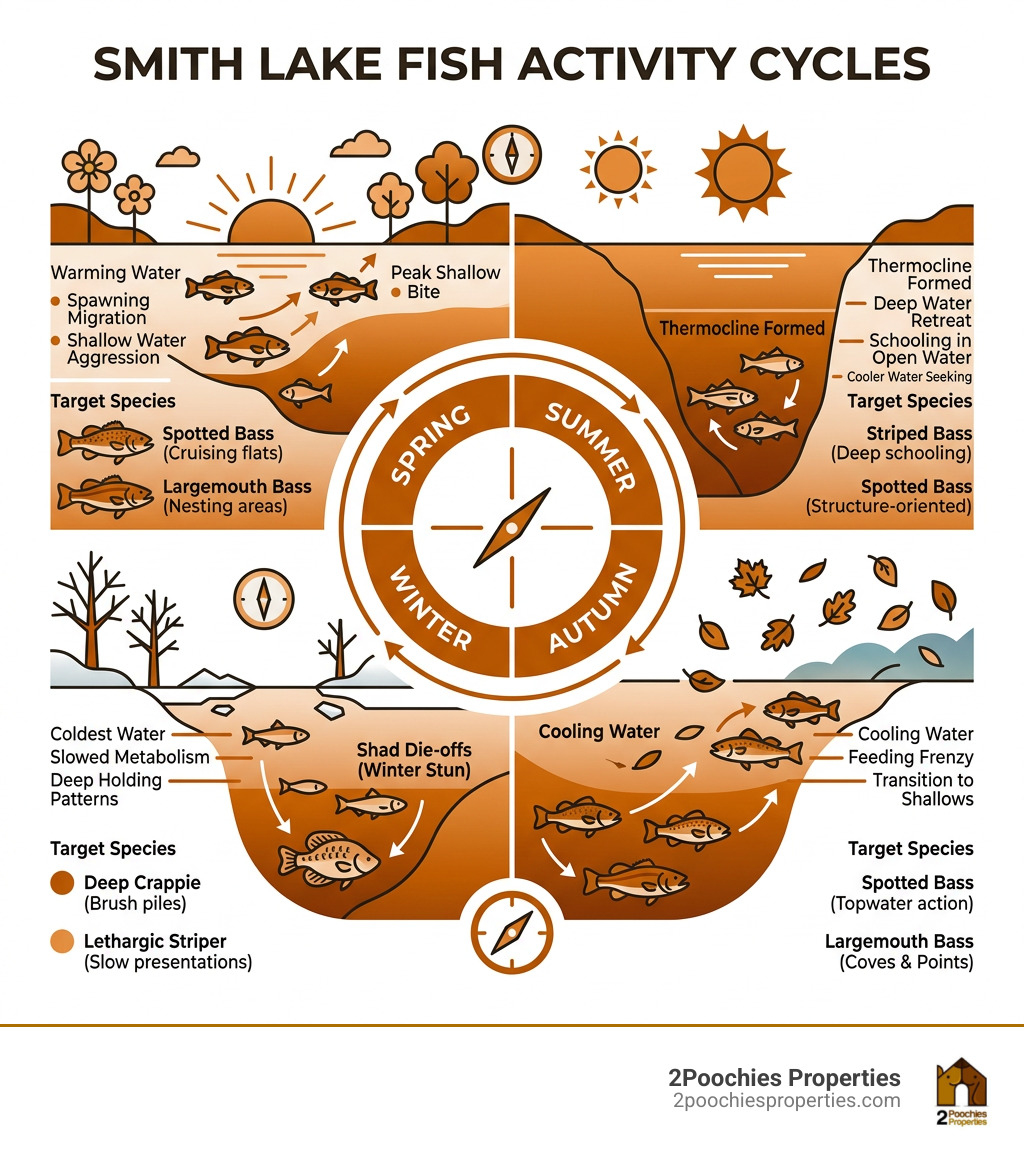
Fishing at Lewis Smith Lake is an experience like no other. Whether we are chasing the aggressive spotted bass or hunting for massive striped bass, the sheer size of this reservoir—spanning Cullman, Walker, and Winston counties—offers endless opportunities. To truly master these waters, understanding the seasonal transitions is key. From the “shad stun” of winter to the deep-water thermocline shifts in the summer, the fish are always on the move.
Current Conditions and Fishing Report Smith Lake

When we look at the latest fishing report smith lake data, the first thing we notice is how much the water level dictates the bite. Smith Lake is a deep, highland reservoir, and it is common to see the water level sit anywhere from 3 to 8 feet below full pool depending on the season and power generation needs.
For example, archived reports from November show levels around 8.6 feet below full pool with water temperatures in the low 70s. In the heat of the summer, temperatures can climb into the mid-80s, forcing many species to seek the oxygen-rich depths or the shade of deep-water docks. The clarity at Smith Lake is legendary; it is often “gin clear,” which means we have to be stealthy. If we can see the fish, they can definitely see us!
With over 500 miles of lakefront shoreline, there is plenty of room to spread out. Most of our successful days start by checking the clarity in the major tributaries like Ryan Creek or the Rock Creek arm, as heavy rains can occasionally stain the backwaters while the main lake remains clear.
Summer Fishing Report Smith Lake Tactics
During the summer months, the fishing report smith lake typically focuses on two things: depth and baitfish. As the sun gets high, the spotted bass move to main lake points and deep timber.
We have found that the most effective summer techniques involve:
- Deep Diving Crankbaits: Specifically those designed to reach 13 to 20 feet. Using a citrus or shad-colored crankbait on long points can trigger those offshore schools.
- Soft Body Swimbaits: Small to medium-sized swimbaits on a ball head jig are a staple. We like to reel these fast through schooling fish when they are “busting” on the surface.
- Topwater Action: Early mornings and late evenings are prime for “walking the dog” with lures like Super Spooks or Vixens.
Spring and Winter Fishing Report Smith Lake Trends
Winter and early spring bring some of the most “explosive” fishing of the year, though the conditions can be tough. When a cold snap hits and water temperatures drop toward the 40-degree mark, we look for the “shad stun.” This is when shad become lethargic or die off due to the cold, creating a literal buffet for bass and stripers.
During these months, we rely heavily on:
- Jerkbaits: The MegaBass Vision 110 +1 is a local favorite. Its ability to stay suspended in the strike zone is vital when fish are moving slowly.
- A-Rigs: An Alabama Rig (or Umbrella Rig) is a must-have in February. It mimics a small school of baitfish and is a fantastic search bait for pre-spawn fish moving from deep winter holes toward secondary points.
- Ice Edges and Bluffs: In extreme winters, ice can form in the back of the rivers. Fishing the edges of these shelf-ice areas can produce massive bags of fish.
For those planning a trip later in the year, be sure to check out our guide on the best fall fishing spots on Lewis Smith Lake to see how the patterns shift as the water cools back down.
Top Species and Where to Find Them
Smith Lake is a “mixed bag” fishery. While it is world-famous for its spotted bass, the trophy potential for other species is just as high.
- Spotted Bass: These are the “kings” of Smith Lake. They are known for being incredibly hard fighters. Look for them around rocky bluffs and deep humps.
- Striped Bass: If we want a real fight, we target the stripers. These fish roam the main river channels and can often be found in huge schools near the “Big Bridge” or Ryan Creek.
- Largemouth Bass: While less common than spots in the clear main lake, largemouths thrive in the more stained water of the creek backs and around blowdowns (fallen trees).
- Crappie: Smith Lake has a massive population of “slabs.” We find them grouped around mid-pocket brush piles or under large lakefront docks.
To target these effectively, many locals use the Hogfarmer 5 wire with blades, especially when the stripers are deep.
Targeting Spotted Bass
Spotted bass at Smith Lake love structure. If we aren’t fishing near something—a brush pile, a steep bluff wall, or a submerged roadbed—we probably aren’t in the right spot.
In the summer, we focus on:
- Deep Structure: Using electronics to find brush piles in 20-30 feet of water.
- Finesse Worms: A shaky head or Neko rig is often the only way to get a bite when the water is ultra-clear.
- Rocky Points: Points that transition from gravel to big boulders are magnets for spots.
Striped Bass and Crappie Patterns
Striped bass are the nomads of the lake. A current fishing report smith lake might place them at the mouth of Ryan Creek one day and five miles up the Blackwater the next. Night fishing for stripers is a popular local pastime, using heavy spoons or live shad lowered into deep schools.
For crappie, the “dock skipping” technique is legendary here. We look for the largest, most shaded docks in the back of creeks. By skipping a tiny jig far back into the shadows, we can pull out limits of fish even in the middle of a bright day.
Essential Gear and Expert Techniques
Because the water is so clear, our gear choices are specific. We almost always use fluorocarbon line (6lb to 10lb for finesse, 15lb+ for power) because it is nearly invisible underwater.
- The Damiki Rig: This has become one of the top winter and spring techniques. It involves a small minnow-shaped plastic on a 3/8oz ball head. We drop it vertically to fish we see on our sonar.
- Texas Rigs: A staple for spring. We like a Gamakatsu worm hook paired with a Missile Baits Destroyer or a Quiver worm.
- Neko Rig: This involves a nail weight in the end of a plastic worm. It provides a unique “pecking” action on the bottom that spotted bass find irresistible.
- Casting Accuracy: On Smith Lake, being “close” isn’t enough. We have to be able to skip a bait under a walkway or land a lure inches from a bluff wall without making a huge splash.
Accessing the Lake and Local Regulations
Navigating Smith Lake is easy thanks to numerous public and private access points. However, we always recommend having a valid Alabama fishing license before you cast a line. You can purchase these online through the ADCNR website.
We also keep an eye on the experts. Local guides like Mike Walker and Reed Montgomery have spent decades studying these waters and often provide the most detailed insights for the weekly fishing report smith lake.
| Boat Ramp Name | County | Amenities | Parking |
|---|---|---|---|
| Smith Lake Park | Cullman | Ramps, Docks, Restrooms | Extensive |
| Speegle’s Marina | Cullman | Fuel, Ramps, Store | Good |
| Duncan Bridge | Winston | Public Ramp, High Traffic | Moderate |
| Arrowhead Park | Walker | Ramp, Camping | Moderate |
Frequently Asked Questions about Smith Lake Fishing
What is the best time of year to fish Smith Lake?
While you can catch fish year-round, most anglers agree that spring (March-May) and late fall (October-November) are the most productive. The temperatures are comfortable for both the fish and the fishermen, and the bass are usually in shallower, easier-to-reach water.
Where are the most productive lakefront spots for bass?
Look for “transition zones.” This means areas where the shoreline changes from a steep bluff to a flat gravel point. The mouths of major creeks like Ryan, Rock, and Crooked Creek are consistently productive because they offer easy access to both deep and shallow water.
What lures are currently working best for stripers?
Currently, umbrella rigs and large soft swimbaits (4.8″ to 6″) are dominating the striper reports. If you are fishing at night, try heavy silver spoons or live bait fished near the thermocline.
Conclusion
Staying on top of the fishing report smith lake is the difference between a frustrating day and a legendary one. Whether we are skipping docks for crappie or throwing jerkbaits for pre-spawn spots, this lake always has something to offer if we pay attention to the details.
At 2Poochies Properties, we want your fishing trip to be as stress-free as possible. Our lakefront vacation rentals are designed with anglers and families in mind—including your four-legged fishing buddies! Our properties feature pet-friendly designs, fenced areas, and durable flooring, so you don’t have to worry about the dog while you’re out on the boat. We even offer boat rentals to help you get out to those distant points and bluffs.
Our rentals average between $180 to $200 per night, making a lakefront getaway affordable and convenient. Ready to land the big one? Book your Smith Lake vacation rental with us today and start planning your next adventure on the water!