
Why March Is the Best Month for Lewis Smith Lake Bass Fishing
Lewis Smith Lake bass fishing in March is some of the best action you’ll find anywhere in Alabama. The lake’s 21,200 acres come alive as prespawn bass move into predictable staging areas — making them easier to target than almost any other time of year.
Here’s a quick snapshot of what works in March:
| What to Target | Where | Best Lures |
|---|---|---|
| Spotted bass | Bluff ends, creek mouth points, narrows | Jerkbaits, medium crankbaits, shaky heads |
| Largemouth bass | Creek arms, sun-baked banks, shallow flats | Finesse jigs, swimbaits, drop shots |
| Both species | Chunk rock, brush piles, channel swing banks | Shaky heads, soft jerkbaits, swimbaits |
Key March tips at a glance:
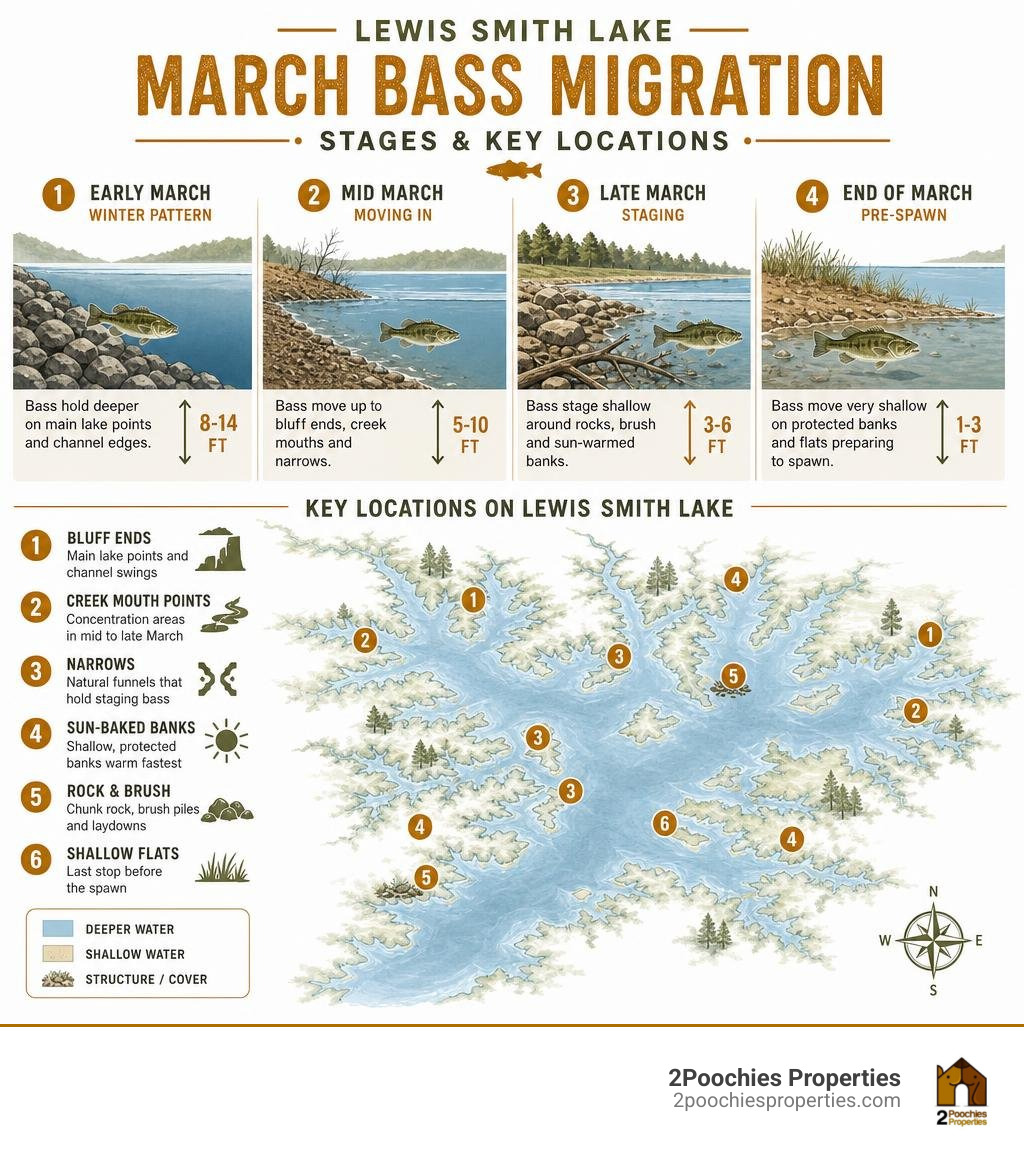
- Bass hold in 3 to 14 feet of water depending on how close they are to spawning
- Spotted bass stage near the main lake, not deep in creeks
- Largemouth favor shallow, wind-protected banks warmed by the sun
- Blueback herring influence where bass suspend and feed
- The 13-15 inch slot limit means keeping fish under 13 inches is encouraged
March is that sweet window before the spawn when fish are aggressive, predictable, and staging up in large numbers along classic structure.
I’m Tim Morgen from 2Poochies Properties, and I’ve spent years on Smith Lake watching guests — and doing plenty of fishing myself — to know exactly what Lewis Smith Lake bass fishing in March demands. Whether you’re planning a family trip with the dogs or a serious fishing getaway, this guide will help you make the most of it.
Lewis smith lake bass fishing march word guide:
Key Strategies for Lewis Smith Lake Bass Fishing in March
To find success during March, you have to understand the unique characteristics of this deep, clear reservoir. Smith Lake is not your average muddy Southern impoundment. With maximum depths exceeding 200 feet and average depths around 60 feet, it behaves more like a highland reservoir.
Water Temperature Transitions
During March, the water temperature begins its slow climb out of the winter fifties. This warming trend triggers the prespawn migration. As the water warms, bass move from their winter deep-water haunts up to shallower staging areas. A few consecutive sunny days can warm shallow pockets quickly, drawing baitfish and hungry bass into the shallows.
Wind and Its Effects
Wind is your friend in March. A steady breeze breaks up the surface clarity, making it harder for the notoriously sharp-eyed spotted bass to inspect your lure. Furthermore, wind pushes warm surface water and plankton toward windward banks, which in turn attracts baitfish schools. If you find a point or a chunk-rock bank where the wind is blowing directly onto the shore, you have found a prime target.
The Blueback Herring Factor
One of the most significant ecological shifts in Smith Lake over the years is the presence of blueback herring. These nomadic baitfish live in deep open water and school tightly. Bass feeding on blueback herring tend to suspend, which can make them tricky to catch because they are less oriented to bottom structure. When bass are keyed in on herring, matching your lure profiles to these slender, silver-blue baitfish is critical.
If you want to dive deeper into the geography and structure of this beautiful reservoir, you can Learn more about Lewis Smith Lake to plan your routes.
Spotted Bass Patterns for Lewis Smith Lake Bass Fishing in March
Spotted bass are the undisputed kings of Smith Lake. They are aggressive, hard-fighting, and grow to impressive sizes here. In fact, the Alabama state record spotted bass — a massive 8-pound, 15-ounce specimen — was caught right here on March 18, 1978.
To target these hard-fighting fish in March, focus on the following structural features:
- Bluff Ends: Where steep rock walls taper off into points, spotted bass will suspend and wait to ambush passing baitfish.
- Creek Mouths: The points situated at the entrances of major creeks act as natural highway rest stops for migrating fish.
- The Narrows: These necked-down areas near the main river channel create current and concentrate baitfish, making them prime feeding zones.
- Staging Areas: Look for fish holding in 3 to 14 feet of water just off the deep-water drop-offs.
For a complete breakdown of how to navigate these deep-water structures, check out our guide on fishing Lewis Smith Lake like a pro.
Largemouth Bass Tactics for Lewis Smith Lake Bass Fishing in March
While spotted bass dominate the main lake, Smith Lake still boasts a healthy and heavy population of largemouth bass. If you are hunting for a big kicker fish, March is the perfect time to target prespawn largemouth.
Unlike spotted bass, which prefer the clear, rocky main lake, largemouth bass seek out flatter, warmer environments:
- Creek Arms: Head into the major creek arms where the water is slightly more stained and warms up faster than the main lake.
- Sun-Baked Banks: Focus on banks shielded from cold north winds that receive direct sunlight throughout the day. Clay and dark rock banks hold heat, warming the surrounding water by a few crucial degrees.
- Shallow Flats and Drop-Offs: Target flats adjacent to deep-water ditches. Largemouth will use these ditches as travel corridors, moving up onto the shallow flats to feed during warm afternoons.
For current tournament-tested tactics on landing these shallow giants, you can read this March largemouth report.
Top Lures and Techniques for Spring Success

Springtime on Smith Lake requires a versatile tackle box. Because conditions can change rapidly from a cold, windy morning to a warm, calm afternoon, you need to be ready to adjust your presentation.
Jerkbaits and Crankbaits
When the wind is blowing, a suspending jerkbait is incredibly effective. Cast it over points and bluff ends, using a pause-and-twitch retrieve. Medium-running crankbaits in shad or crawfish patterns are also excellent for covering water and bouncing off chunk rock to trigger reaction strikes.
Shaky Heads and Drop Shots
When the bite slows down or the sun comes out, finesse techniques shine. A 3/16-ounce or 1/4-ounce shaky head jig paired with a green pumpkin finesse worm is a staple on Smith Lake. Cast it around chunk rock and dock walkways. A drop shot rig is another must-have, especially for targeting suspended fish or those holding tight to deep brush piles.
Swimbaits and Jigs
For larger fish, throw a line-through or paddle-tail swimbait along ditch lines and points. A 1/4-ounce finesse jig with a crawdad trailer is also a highly effective tool for picking apart rock piles and laydowns.
For a comprehensive look at year-round bait selections, read our ultimate guide to Lewis Smith Lake fishing.
| Lure Type | Target Depth | Best Location | Presentation |
|---|---|---|---|
| Shaky Head | 5 – 15 feet | Chunk rock, dock walkways | Slow drag and shake line |
| Finesse Swimbait | 3 – 12 feet | Ditches, drains, points | Steady, slow retrieve |
| Jerkbait | 4 – 10 feet | Bluff ends, windy points | Jerk, jerk, long pause |
To dial in your strategy even further, check out these local expert reports:
- Learn the sweet spots with this Local Expert Fishing Report: Easy guide to catching TONS of spotted bass (loaded areas) .
- If you prefer to fish without relying on forward-facing sonar, follow this guide: Local Expert Fishing Report: Catch TONS of keeper Smith lake spotted bass! (NO LIVESCO… .
- To compare high-tech and traditional methods, check out the Local Expert Fishing Report: Smith Lake Spring Bass fishing LIVESCOPE/ NO LIVESCOPE TA… .
Understanding the 13-15 Inch Slot Limit and Regulations
One of the most important aspects of fishing Lewis Smith Lake is understanding and participating in its conservation efforts. The lake has a protective 13-15 inch slot limit on spotted bass.
Why Keep the “Unders”?
Many anglers are conditioned to release every fish they catch. However, on Smith Lake, the Alabama Wildlife and Freshwater Fisheries Division actively encourages anglers to keep spotted bass that are under 13 inches.
Because the lake has an incredibly high population of spotted bass, keeping smaller fish reduces competition for forage. This allows the remaining bass to grow larger and healthier.
An electrofishing survey showed that this management strategy works; over 16% of the bass captured exceeded 15 inches, showing a steady improvement in the overall size of the fishery. By keeping your limit of small “unders,” you are directly helping to build a better trophy fishery!
To stay up to date on the latest lake conditions and regulation discussions, keep an eye on our latest Smith Lake fishing report.
Night Fishing and Topwater Opportunities
While night fishing is traditionally a summer pattern on Smith Lake, March can offer some surprising late-day and after-hours opportunities, especially as the water temperatures climb.
Long Running Points and Dock Lights
As the sun goes down, spotted bass will often move shallow onto long running points in search of baitfish. While summer night tournaments often see anglers targeting fish in 20 to 30 feet of water, March night anglers can find active fish much shallower.
Some anglers target dock lights that attract baitfish, but a more consistent strategy is rotating through primary points with a shaky head or a dark-colored spinnerbait.
Early Spring Topwater
If you experience a string of unusually warm March days, do not hesitate to throw topwater lures. Walking baits like a Sexy Dawg or small poppers fished slowly over shallow flats and near standing timber can produce heart-stopping explosions from prespawn bass.
For more stories and strategies regarding early-season transitions, check out Smith Lake March Madness. If you are interested in a different approach, you can also explore Lewis Smith Lake Bass Fly Fishing – Saltwater on the Fly to try your hand at casting flies for these aggressive fish.
Frequently Asked Questions about Smith Lake Bass Fishing
Where do spotted bass stage in March?
Spotted bass primarily stage on bluff ends, creek mouths, and narrows close to the main river channel. They prefer rocky structures and will hold anywhere from 3 to 14 feet deep, depending on the weather and water clarity.
What is the best water temperature for March bass?
The magic window for prespawn activity begins when water temperatures climb into the mid-50s. Once the water hits 58 to 62 degrees, the bass will actively move into shallow water to prepare for the spawn.
Do I need LiveScope to catch bass on Smith Lake in March?
Absolutely not! While forward-facing sonar is a popular tool, classic bank-beating tactics work incredibly well in March. Casting shaky heads, jerkbaits, and crankbaits around visible structures like chunk rock, clay banks, and dock walkways will catch plenty of fish.
Plan Your March Fishing Getaway
At 2Poochies Properties, we know that a great fishing trip is even better when you can bring the whole family — including your four-legged fishing buddies! We offer premier pet-friendly vacation rentals right on the shores of Lewis Smith Lake, featuring pet-safe designs with fenced yards, durable flooring, and professional cleaning to ensure an allergy-free stay.
After a long day of chasing spotted bass, you can relax in a beautiful lakefront home, cook up the day’s catch, or take one of our boat rentals out for a sunset cruise with the family.
Skip the third-party fees and book direct with us to get the best value on your next lakefront vacation. Book your pet-friendly lakefront home direct today and get ready to experience the thrill of March fishing on Smith Lake!