
Most dogs can swim in a lake, but not every dog does it naturally, and not every lake is safe on every day. Three things decide whether a swim goes well: a life vest on the dog, a quick check of the water before it gets wet, and a rinse and a close look at the dog afterward. This guide covers all three, with Smith Lake, Alabama, as the example. It also explains why staying in a pet-friendly lakefront home with a fenced yard and your own dock makes each swim easier to manage.
Key Takeaways
- Swimming is not instinct for every dog. Short-legged, long-bodied and heavy-chested breeds often need a life vest to stay afloat comfortably.
- Skip any water that is foamy, scummy, smelly or colored like paint. Blue-green algae can make a dog seriously ill, and a dog can look fine at first.
- After every swim: rinse your dog with clean water, dry the ears and skin folds, and watch for vomiting, diarrhea, weakness or tremors.
- Smith Lake is deep and busy on summer weekends, so a vest, a leash on the first visit and swimming from a dock or gentle shoreline make the day safer.
- Booking direct with us gives you a home built around the dog, with a fenced yard, a swimming dock and cleanup stations, so the swim is only part of a relaxed trip.
Table of Contents
- Can Dogs Swim in Lakes?
- How to Teach Your Dog to Swim in a Lake
- Is Lake Water Safe for Dogs?
- How to Check the Water Before Your Dog Goes In
- Swimming at Smith Lake With Your Dog
- After the Swim: Rinse, Dry, Watch
- Why a Pet-Friendly Home Makes Lake Swims Easier
- Our Perspective
- Plan Your Smith Lake Trip With Your Dog
- FAQ
- Sources
Can Dogs Swim in Lakes?
Yes, most can, and many love it. A lake is often easier for a dog to learn in than a pool. A professional dog trainer quoted by the American Kennel Club notes that ponds and lakes tend to feel more natural to dogs than chlorinated pool water, and that a gradual slope into the water helps.
The common belief that every dog is a natural swimmer is a myth. The same AKC guidance explains that short-legged or long-bodied breeds can struggle, and that some breeds carry their weight in a way that makes swimming hard without a life vest. The encouraging part is that, with a vest and some practice, every breed should be able to get around safely in the water.
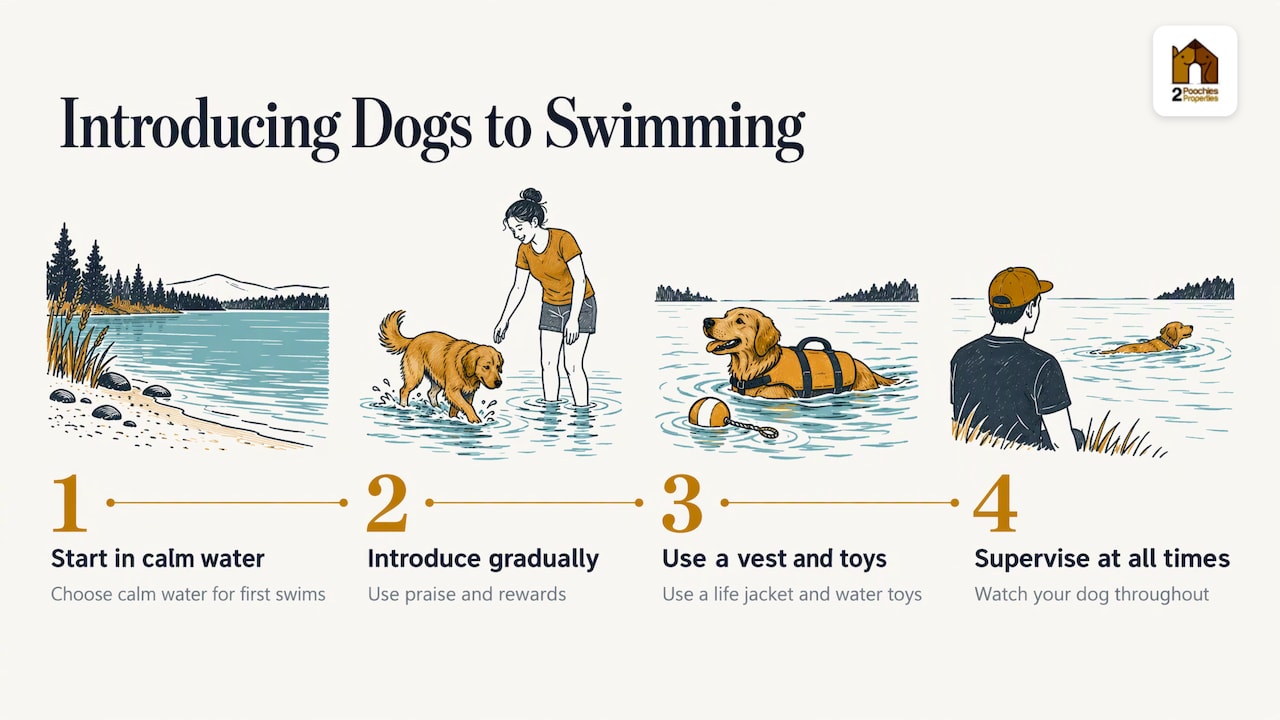
Veterinarian-reviewed guidance from PetMD adds that dogs of any age, including seniors, can learn to swim. Its advice is to start in calm water, introduce the water gradually with praise and rewards, use a life jacket and water toys, and supervise at all times.
Dogs That Often Need Extra Help
If your dog is a bulldog, a corgi, a dachshund, a pug or any other short-legged or heavy-chested dog, plan on a vest from the first paddle. The same goes for puppies, seniors, and any dog that has never been in deep water. A vest keeps the dog’s head up, gives you a handle to lift the dog out, and makes it much easier for a tired dog to stop and rest.
How to Teach Your Dog to Swim in a Lake
A first lake swim should feel like a game, not a test. These steps follow the veterinary and training advice above.
- Pick calm, shallow water. Choose a gentle slope or a dock with steps, away from boat traffic and current.
- Fit the vest on dry land. It should be snug without restricting the shoulders. Let the dog wear it around the yard first so it feels normal.
- Walk in with your dog. Dogs follow your lead. Go in yourself, call your dog with a happy voice and reward every step forward.
- Keep the leash or a long line on. The Preventive Vet guidance recommends a leash at the lake, especially on a dog’s first time, and a reliable recall.
- Keep sessions short. A few minutes of paddling, then a rest on shore with fresh water, is plenty for a beginner.
- Be careful with fetch. Tossing balls and sticks into the water encourages gulping, so keep throws short and calm.
Never push, throw or carry a reluctant dog into deep water. A dog that panics learns fear, and fear makes the next swim harder.
Is Lake Water Safe for Dogs?
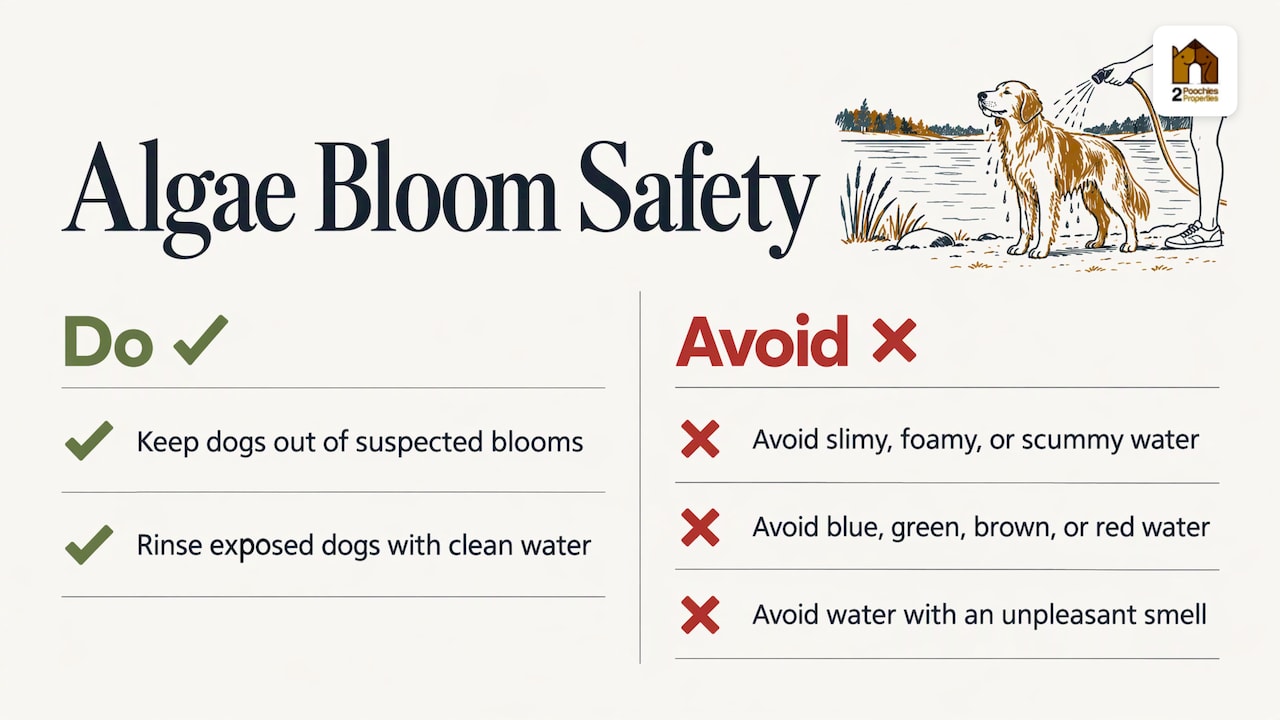
Often yes, but you have to look first. The American Animal Hospital Association lists the main natural-water hazards: currents, water-quality problems such as harmful bacteria and blue-green algae, and wildlife. It advises keeping dogs leashed or under close control. It also says to avoid water that looks discolored, foamy, scummy or paint-like, and to check local advisories.
Blue-Green Algae: The One to Take Seriously
Blue-green algae are bacteria called cyanobacteria. In warm, still, nutrient-rich water they can multiply into a bloom, and some produce toxins. The US EPA tells owners to keep dogs out of water that is slimy, foamy or scummy, oddly colored (blue, bright green, brown or red, like paint floating on the surface), or smelly.
The CDC adds that if you suspect a bloom, your dog should not drink, swim or play in the water, eat near it, eat dead fish washed ashore, or eat algae. If the dog has already been in, wash it off with clean water straight away so it cannot lick the algae off its coat.
There is a reason this guidance is so firm. CDC veterinary reference material, published for clinicians, explains that dogs can become severely ill within minutes to days of swallowing the toxins, whether by drinking the water, swallowing it while swimming or licking it off fur. It also says a dog that looks fine after a swim can still be at risk, and that prompt supportive care is what can save a dog’s life. The practical lesson is simple: when the water looks wrong, do not swim.
Other Everyday Hazards
- Bacteria after rain. Heavy rain can wash bacteria into a lake. The CDC’s healthy swimming guidance says to stay out if the water looks cloudier than usual, is discolored, smells bad or has pipes draining into it.
- Swallowed water. The AKC notes that dogs can dilute their body’s salt levels by drinking too much fresh water while swimming, and advises prompt bloodwork if behavior changes after a swim. Keep sessions short and the throws gentle.
- Wildlife and debris. Snakes, snapping turtles and sharp rocks or submerged debris are all possible in natural water. Walk the entry point before your dog uses it.
- Giardia. Water contaminated by animal feces can carry the parasite Giardia, which causes diarrhea. A veterinary clinic’s summer water safety note advises carrying fresh water for the dog so it does not drink from the lake.
How to Check the Water Before Your Dog Goes In
A two-minute routine covers most of the risk:
- Look it up first. Check online whether your swim area is monitored, under an advisory or closed, especially after heavy rain. The CDC recommends this before any lake visit.
- Look at the water. Walk the edge. Scum, foam, a green or blue sheen, floating mats or a bad smell mean you turn around.
- Look at the bottom and the surroundings. Check for rocks, debris, fast-moving water and drain pipes, as a veterinary clinic’s dog swim safety checklist suggests.
- Bring fresh water. Offer it throughout the swim so your dog does not drink lake water.
- Take a vest. Use it for weaker swimmers and for any deep-water swimming.
The Barnstable County health department’s advice for dog owners puts it in five words: when in doubt, stay out. A day with a fenced yard and a shady porch is never wasted.
Swimming at Smith Lake With Your Dog
Lewis Smith Lake is a large reservoir in northwest Alabama, formed by Smith Dam. Families love it for swimming, boating and quiet coves. Its depth is part of the charm, and it is also the reason to be deliberate with a dog.
A recent Alabama news report on swimming safety gives practical tips that apply well to Smith Lake: the underwater terrain can be steep, so deep water arrives quickly; weekends bring boats, personal watercraft and swimmers; and it is wise to avoid dams, spillways and boat channels. It also advises staying out after heavy rainfall, never swimming alone, wearing a life jacket in deep or moving water and following local advisories and warning signs.
Here is how that translates for you and your dog:
- Swim from your own dock. A dock with steps gives your dog a predictable entry and exit, away from boat lanes.
- Choose calm hours. Early morning is usually quieter on the water than a summer Saturday afternoon.
- Vest on, every time. Even strong swimmers tire in deep water, and a vest helps your dog return to the dock.
- Stay near the shore. Keep dogs out of channels and well away from dams.
- Rain rule. If it has rained heavily, spend the day on the porch and in the yard instead.
Pontoon Days With a Dog
A pontoon is the easiest way to share the lake with a dog. It is steady, has room to stretch out, and lets you pick a quiet cove for a swim. Put the vest on before anyone leaves the dock, bring fresh water and shade, and let your dog board calmly. Our guide to taking your dog boating safely covers the routine in more detail.
After the Swim: Rinse, Dry, Watch
What you do in the hour after a swim matters as much as the swim itself.
Rinse. Texas A&M’s veterinary college advises rinsing a dog with clean water after swimming in a lake, river, pool or ocean. If the water looked suspect, rinse thoroughly right away.
Dry. The same guidance says to dry the ears and skin folds to avoid inflammation or infection. Floppy-eared dogs and wrinkly breeds need extra attention here.
Watch. The CDC lists the signs to look for after possible algae exposure: loss of energy or appetite, vomiting, stumbling, foaming at the mouth, diarrhea, convulsions, drooling and tremors. The EPA notes symptoms can start from 15 minutes to several days later.
My Dog Has Diarrhea After a Lake Swim
A single loose stool after a day of swallowing lake water may be nothing more than an upset stomach. But diarrhea can also come from bacteria, Giardia or algae toxins, and these look alike at home. If your dog also vomits, seems weak, wobbles, drools heavily, has trouble breathing or shakes, call a veterinarian right away. If you suspect algae, say so on the phone.
For a poisoning emergency, these hotlines are listed in CDC veterinary guidance: Poison Control Center, 1-800-222-1222; ASPCA Animal Poison Control, 1-888-426-4435; Pet Poison Helpline, 1-855-764-7661. Do not wait to see whether the dog improves.
Why a Pet-Friendly Home Makes Lake Swims Easier
Most of the safety routine above is easier when the home is set up for it. A fenced yard lets your dog dry off and settle without a leash. A private dock means you pick the entry point and the time of day. A cleanup station and a place to rinse a dog mean wet paws stay outside the living room.
That is how our lakefront homes are designed. Each is professionally cleaned and has amenities for dogs, including fenced yards, dog beds and cleanup stations. Several offer swimming docks, kayaks and boat rentals. Families with allergies also appreciate our allergy-friendly interiors.
If you are comparing homes, these pages go deeper: our guide to pet-friendly Smith Lake vacation homes and our look at rentals with a fenced yard for dogs.
Our Perspective
We built 2Poochies Properties around a simple idea: a dog should be on the trip, not left behind, and the home should be ready for that dog.
When a dog and a lake meet, the details decide the day. A fenced yard means the dog can run before and after a swim. A swimming dock gives a safe, familiar way in and out of the water. A clean, allergy-friendly interior means a wet-dog day does not turn into a cleaning problem for you, because we handle professional cleaning between stays.
We also believe in talking with guests directly. When you book direct, you speak with us, tell us about your dog, and ask about the home, the dock and the boat options. Booking direct is also how our guests save, since there is no extra layer between you and the home.
Our advice is the same one we would give a friend: bring a vest, bring fresh water, check the lake, and let the dog set the pace.
2Poochies Properties
Plan Your Smith Lake Trip With Your Dog
If you want a home where swimming, pontoon days and a fenced yard all come with the stay, our pet-friendly lakefront homes at Smith Lake are built for exactly that. Tell us about your dog, your group and your dates, and we will help you find the right fit. Booking direct keeps the conversation simple and helps you save. Contact us about a pet-friendly Smith Lake home.

We also offer boat rentals at Barney’s Bluff and Tigua’s Sunrise, so you can take your dog out on the water with us from the same trip.
FAQ
Can all dogs swim in lakes?
Not all dogs swim naturally, though most can learn. Short-legged, long-bodied and heavy-chested breeds often struggle, and the AKC says every breed should be able to get around safely with a life vest and some practice. Start in calm, shallow water and stay close.
Is lake water safe for dogs?
It can be, when the water is clear, smells normal and has no advisory. Avoid water that is foamy, scummy, smelly or colored like paint, because blue-green algae can seriously harm dogs. Check local advisories and stay out after heavy rain.
Is swimming at Smith Lake safe with a dog?
Yes, with sensible habits. Smith Lake gets deep quickly and has busy boat traffic on summer weekends, so use a life vest, swim from a dock or gentle shoreline and avoid dams, spillways and boat channels. Follow posted warnings and local advisories.
What should I do after my dog swims in a lake?
Rinse your dog with clean water, dry the ears and skin folds, and offer fresh drinking water. Over the next day, watch for vomiting, diarrhea, weakness, stumbling, drooling or tremors. Call a veterinarian promptly if any appear.
Why does my dog have diarrhea after swimming?
Swallowed lake water can cause a mild stomach upset, but bacteria, Giardia or algae toxins can also be the cause. If diarrhea comes with vomiting, weakness, tremors or breathing trouble, contact a veterinarian immediately.
Sources
- Can All Dogs Swim? How to Teach a Dog to Swim, American Kennel Club
- How to Teach Your Dog to Swim, PetMD
- Water Safety Tips for Dogs, AAHA
- How to Protect Your Pooch, US EPA
- Preventing Pet and Livestock Illnesses Caused by Harmful Algal Blooms, CDC
- Veterinarian Reference for Cyanobacterial Blooms, CDC
- How to Safely Visit Oceans, Lakes, and Rivers, CDC
- Dog Swim Safety, White Hall Animal Clinic
- Keeping your Pets Water Safe this Summer, Animal Clinic of Clifton
- Keep Your Dogs Safe: Harmful Algae in Ponds, Barnstable County
- Tips for Taking Dogs Swimming, Texas A&M Veterinary Medicine
- These are the most dangerous places to swim in Alabama, Montgomery Advertiser
- Lewis Smith Lake, Wikipedia